


Sending demos to labels is not just about sharing music. It is about presenting yourself as a reliable professional who understands confidentiality, production workflow, and industry expectations. Public links may seem convenient, but they often create unnecessary risks and signal a lack of control. This guide walks through best practices for sending demos privately and explains how Pibox enables secure, professional demo delivery built specifically for music creators.
Why private demo delivery matters
When you send a demo, you are sharing unreleased intellectual property. Public or semi-public links can be forwarded, indexed, or accessed by unintended listeners without your knowledge. Once a demo escapes its intended context, you lose control over timing, exclusivity, and narrative.
David Hooper writes in Music Marketing for the DIY Musician, “Control equals value in the digital age. If you give away access, you give away leverage.” Private demo delivery preserves that leverage. It protects your work, respects label workflows, and shows that you take your career seriously.
Best practices for sending demos to labels
Successful demo delivery balances security with ease of listening. Labels want fast access, but they also expect discretion.
Create secure non-public links
Public cloud links are designed for convenience, not confidentiality. Even unlisted links can be shared endlessly once they leave your inbox. Secure non-public links ensure that only intended recipients can access your demo and that your music does not circulate outside its original context.
A private link communicates intent. It tells the label that this demo was shared deliberately and exclusively, not broadcast to the internet.
Use password protection and expiration controls
Passwords add a critical second layer of security, especially when links are forwarded internally within a label. Expiration dates prevent long-term exposure and ensure that outdated demos do not resurface months or years later.
Time-bound access also creates urgency. When a demo has a clear availability window, recipients are more likely to listen promptly rather than postponing indefinitely.
Track engagement and downloads
Sending demos without visibility leaves artists guessing. Engagement tracking tells you whether a demo was opened, when it was accessed, and whether it was downloaded. This data helps you follow up with confidence rather than sending blind reminders.
From a professional standpoint, tracking also helps you prioritize relationships. You can focus your energy on labels that actively engage with your music.
Centralize demos in one secure hub
Scattered demo files lead to mistakes. Wrong versions, broken links, or missing files can derail a submission entirely. Centralizing demos in one secure hub keeps everything organized, current, and easy to resend if needed.
A single source of truth also simplifies collaboration. If you update a mix or master, you know exactly where the latest version lives.
Include professional materials with your demo
Music alone is rarely enough. Labels want context. A concise artist bio, credits, genre positioning, and any relevant background help decision-makers quickly understand your project.
As producer and educator Bobby Owsinski notes in The Music Producer’s Handbook, “People don’t just listen to music. They evaluate the story behind it.” Providing context improves comprehension and strengthens first impressions.
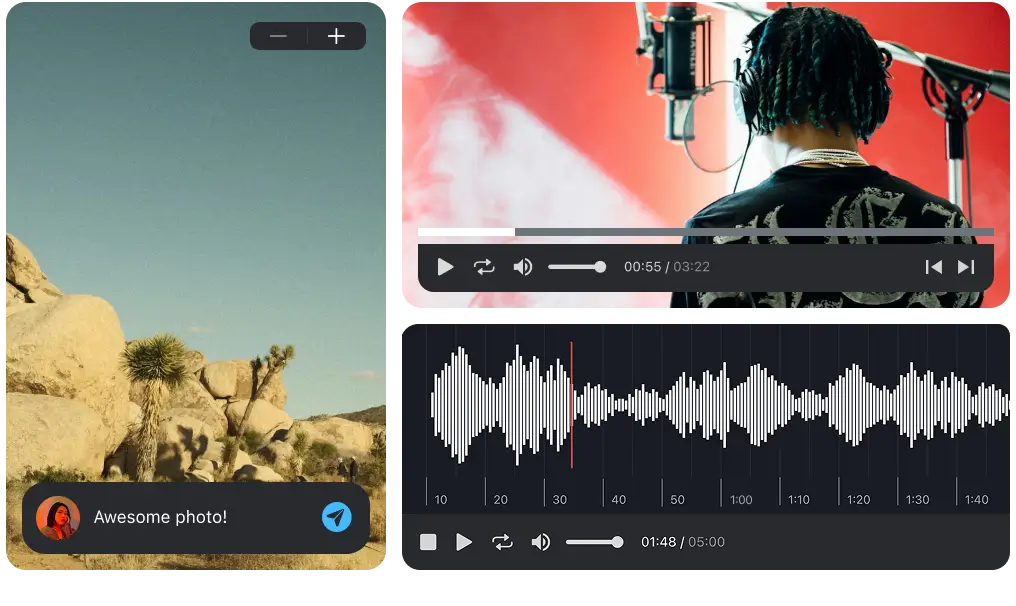
Easier, faster way to securely share your demos, collect and manage feedback, and grow as a professional.
Why labels prefer secure demo delivery
Labels manage sensitive unreleased material every day. Secure demo delivery reduces internal risk and simplifies their review process. It prevents accidental leaks, protects relationships with artists, and keeps submissions organized.
Mark Cawley writes in Music Business Handbook and Career Guide, “Clarity and presentation are as important as the music itself; the easier you make it for industry professionals, the better your chances.” Secure, well-presented demos reduce friction and increase the likelihood of serious consideration.
How Pibox helps you send demos the right way
Pibox is designed specifically for private creative sharing, making it an ideal solution for sending demos to labels without public links.
Secure closed links with access control
Pibox generates private links that are not publicly discoverable or indexed. You can restrict access by email or protect links with passwords, ensuring that only approved recipients can listen to your demos.
This level of control is essential when sharing unreleased material with labels, managers, or A&R teams.
Expiration dates and download limits
With Pibox, you decide how long a demo remains accessible and how many times it can be downloaded. Expiration dates automatically disable links after a set period, preventing long-term exposure.
Download limits help maintain exclusivity and prevent uncontrolled redistribution of your files.
Activity notifications and analytics
Pibox provides real-time notifications when someone opens or downloads your demo. This removes uncertainty and allows you to time follow-ups intelligently rather than guessing.
Analytics also help you understand engagement patterns across multiple submissions.
Professional presentation
Instead of raw file listings, Pibox presents demos in a clean, minimal interface designed for listening. This elevates your submission and reflects professionalism without distracting from the music itself.
A polished presentation signals that you respect the label’s time and workflow.
Organized demo management
Pibox keeps all versions, files, and notes in one place. This makes it easy to resend demos, share updated mixes, or provide additional material without confusion.
For artists sending multiple submissions, organization becomes a competitive advantage.
Step-by-step: send your first private demo with Pibox
Upload your demo. Upload your audio files in high-quality formats and add relevant metadata or notes to provide context.
Configure access. Choose who can access the demo, apply password protection if needed, and decide whether downloads are allowed or restricted.
Set expiration and limits. Define how long the link stays active and apply download limits to maintain control over distribution.
Send and track. Share the private link with the label and monitor engagement through notifications and analytics.

Manage uploads and share your future hits with labels via Pibox. Safe and fast.
Tips for successful demo submissions
Tailor your message. Personalized outreach stands out. Briefly explain why your track fits the label’s roster or aesthetic rather than sending generic messages.
Follow label guidelines. Many labels specify preferred formats or submission channels. Respecting these guidelines demonstrates professionalism and attention to detail.
Follow up respectfully. If you do not receive a response, send a short, polite follow-up after an appropriate interval. Avoid repeated messages that create pressure.
Keep audio quality high. Always send your best-quality audio. Poor sound quality can undermine strong compositions and mixes. Pibox lets you upload and share lossless audio files, preserving full audio quality throughout the review process.
Conclusion
Sending demos to labels without public links protects your music, preserves exclusivity, and communicates professionalism. By following these best practices and using Pibox for secure, private sharing, you maintain control while presenting your work in a way that labels trust and respect.


